Little Bit About Me
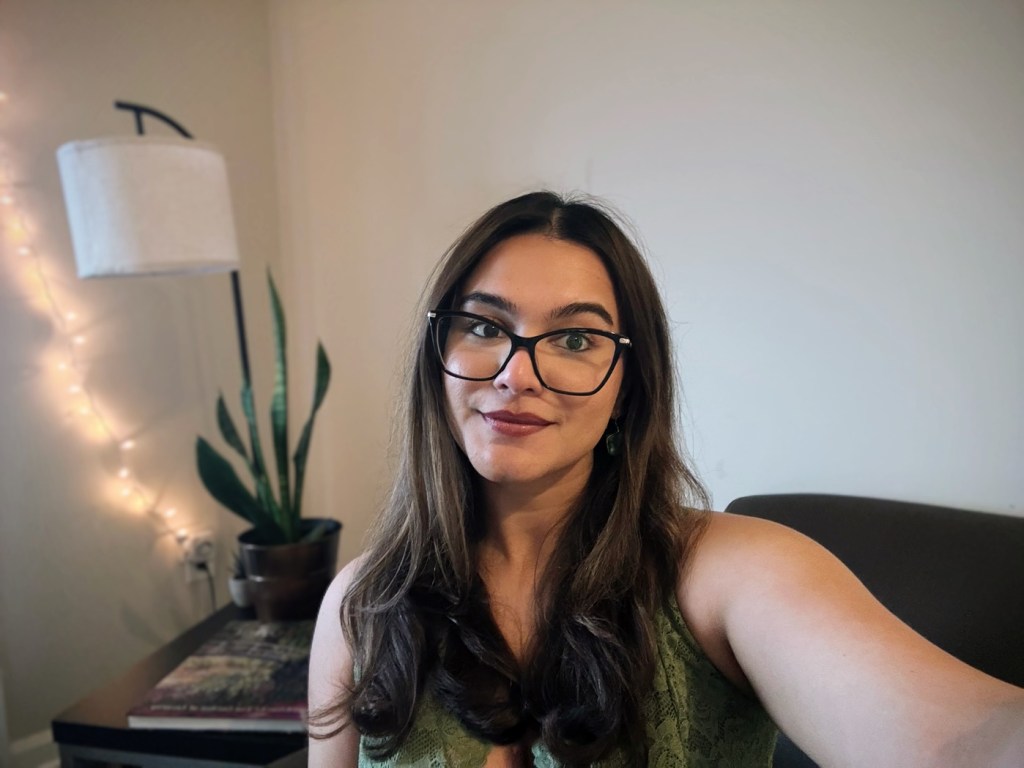
Hi, I’m Anushka Das, an incoming graduate student at Columbia University, where I’ll be pursuing a Master’s in International Affairs with a focus on International Security and Diplomacy.
This space is where I let my creative side breathe. From my attempts at poetry to political essays to books I am reading and everything in between, this is a collection of my thoughts, questions, and perspectives. I like to think of it as a more personal window into who I am.
Before pursuing graduate school, I earned dual bachelor’s degrees in Psychology (B.S.) and Politics, Philosophy, and Economics (B.A.), along with a minor in Cognitive Science, from The Ohio State University, graduating in 2023.
After finishing a year early, with two degrees in hand, I thought I had everything figured out. Law school felt like the obvious next step. But when it came time to write my personal statement, I realized something I couldn’t ignore: I didn’t actually want it. I was pursuing it for all the wrong reasons.
That realization changed everything.
I decided to pause and really reflect on what I was genuinely interested in. During that time, I found myself drawn to studying the 1947 Partition of India, something that felt deeply personal given my family’s history. Both my maternal and paternal sides experienced Partition, moving from what was then East and West Pakistan to India. Though my mother is Punjabi and my father is Bengali, a mix of cultures, histories, and stories I’ve grown up carrying, even when I didn’t fully understand them, both were raised in Madhya Pradesh, where I was born, before we eventually moved to Dilli (Delhi). Growing up across different places, I never really felt tied to any one “region.” I always just thought of myself a regular Indian, a bit detached from my sub-ethnic identities. There’s a scene in Chak De! India that has always stayed with me, it captures that feeling of moving beyond regional identities. For me, home was Dilli, a city where people from everywhere come together to build better lives.
Around the age of 12, I had to redefine myself as Indian-American, when my parents, my older brother, and I moved to a small suburb called Dublin, Ohio. It’s where I spent the rest of my angsty teenage years, constantly trying to balance my American and Indian identities.
In college, that weird identity crisis and tension turned into genuine curiosity. I started wanting to understand what my “Indian” identity actually meant. In the States, I noticed how Indian communities often organized themselves, there was always a Gujarati group, a Telugu group, a Punjabi group, a Tamil group. People took pride in these identities. And I wanted to too! But I had never grown up thinking of myself as Punjabi or Bengali, nor did I speak either of the languages.
This weird gap made me curious to learn more about my family, my heritage and my culture.
I found myself reading deeply into Partition studies, and from there, as someone naturally drawn to politics, I began exploring how conflicts across the region have shaped its people, its relationships, and the way we perceive one another.
Over time, I started noticing patterns, not just of division, but of unity that somehow existed in spite of it. People across the subcontinent felt so similar, even though we’re constantly told how different we are. A lot of the hate we see, whether religious, regional, or political, seems rooted in conflicts that, when you really study them, make you realize how much we’ve been pushed apart. And yet, there’s so much shared history and culture there, so much potential for something different.
That’s when it clicked: this is what I wanted to study. This is the work I wanted to be part of.
I decided to pursue graduate studies in International Affairs, focusing on South Asia, with the hope of contributing, however I can, to a future where the region is more connected, the people are more united, more collaborative, and more at peace. My dream is to see a South Asia that overcomes its past and current differences to build a collective future.
After taking two years off and working full-time at the South Asian American Policy and Research Institute (SAAPRI), I knew the time was right to take that next step.
So here I am.
My Website
The purpose of this website is to offer a glimpse into different facets of my identity. While it doesn’t capture every part of who I am, my goal is to share meaningful aspects of my work, thoughts, and growth with others.
Under the “Political Insights” tab, you’ll find some blogs, reflections, political essays etc on topics that resonate deeply with me, particularly those related to South Asia.
I don’t write very often, and that’s by design. I believe good writing comes from taking the time to really understand what you’re engaging with. There’s so much content being produced constantly, and I don’t want to contribute just for the sake of it. I’d rather listen, learn, and sit with ideas, especially from those who have spent years studying them—and write only when I feel ready to say something that matters.
Feel free to explore my passion for music, peruse the books I read, poems I write when I am feeling ~existential~ and discover other things on the Rooh page.
“My attachment to my idea is provisional. There’s no unconditional love for them.”
— Daniel Kahneman
A Commitment to Myself – my guiding principle
The world is continuously evolving, as are communities and individuals. All the time. It’s easy to fall behind.
I know that my existence and my being is very insignificant in relation to the vastness of the world in many ways. However, I understood very early on in life that if I want to attribute significance to my own existence, it requires a conscious effort to acknowledge and understand the intricate connection between myself and the dynamic nature of constantly changing societies and people in this world.
My being is relative to the being of this world; my existence is dependent on the existence of the world. And so, I recognized that my own thoughts, essence, consciousness, call it what you may, must stay relative to the ongoing changes around me.
Basically, you gotta move on with the times and be open to changing yourself as time goes.
This is essentially my guiding principle and my life’s philosophy. I refuse to let my beliefs become part of my identity as my identity is supposed to be continuously evolving. I don’t view my commitment or emotional connection to my own ideas as absolute; rather, my attachment is conditional and subject to change. This is why I love the quote above from one of my favorite psychologists.
I value remaining receptive to reassessing, modifying, and even discarding my ideas based on circumstances, feedback, and new insights. My goal in life is to maintain a flexible and pragmatic stance towards my own thoughts and concepts, understanding that they are not rigid and may undergo evolution over time. I’d like to thank my parents and brother for inspiring and instilling this attitude in me towards life.
I hope I can carry the same empathy towards others and avoid the pitfalls of forming lasting judgments based solely on appearances and holding onto the initial impressions of individuals or situations, which we all know can be misleading sometimes, in a good and a bad way.
I can only hope that you as a reader extend the same empathy towards my writings and opinions. If my ideas make you uncomfortable, I welcome the opportunity to understand the roots of that discomfort and gain insight into your perspective.
In the event I appear ignorant or mistaken, I extend my sincere apology for any shortcomings, and I am committed to earnestly rectify and refine my stance.
 Anushka Das