Partition Series, part 2
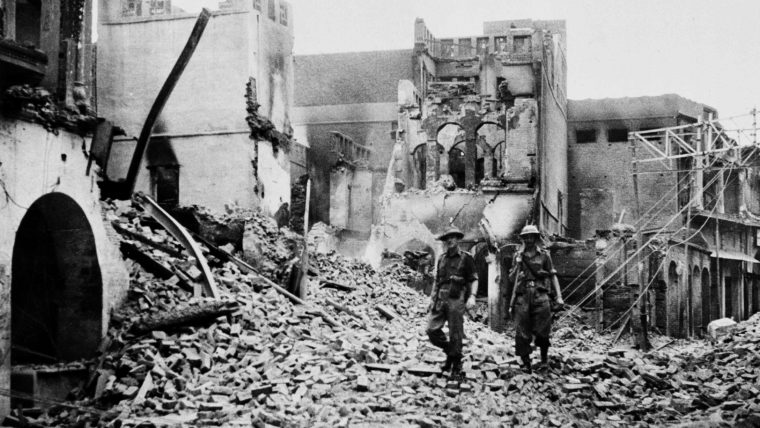
It has always struck me as both puzzling and ironic that throughout history, humans worldwide have sought justifications for creating territorial partitions among themselves based on seemingly trivial identity distinctions. What truly puzzles me is not the creation of such territories based on minor identity differences per se as I recognize that territorial marking is a fairly natural phenomenon. It’s rather in the fact that we often justify such divisions in the name of establishing “peace” and “harmony”.
My puzzlement and frustration lies in the fact that in the process of partitioning, violence and animosity towards the “other” ends up being rationalised and justified on temporary grounds in the pursuit of an end goal of a harmonious community. Though even after partitions have been implemented, the envisioned goal of achieving a peaceful and non-violent community is seldom realised. Relations between India and Pakistan qualify as an example for demonstrating such a case.
I concluded my first blog in the Partitions series by highlighting the potential threat of religious identity taking precedence over other sub-identities and shared commonalities within Indians, which I believe carries a looming risk of another form of partition within Indians. While this form of partition may not initially involve spatial discussions, once the emphasis on religious identity reaches a critical level, the discourse has the potential to gradually evolve into spatial separations based on those religious divisions.
Given the history of territorial/spatial partitions worldwide involving wars, violence, and civil unrest, it’s crucial to shift away from considering spatial separations as viable outcomes. We must break free from dependence on partitions, especially those rooted in religious identity divisions. Achieving this requires a critical reconsideration of how we view partitions in the first place.
By challenging and reexamining our views on partitions, we can cultivate a more profound understanding of how to promote peace without defaulting to partitions as the immediate solution for managing or resolving conflicts between different parties. This shift in our mindset thus opens the door to exploring alternative approaches that prioritise unity, understanding, and collaborative solutions over divisive measures.
Throughout this blog, I will be using the event of the 1947 Partition of the Indian subcontinent as a cornerstone for my argument. However, I am confident that the implications of my argument transcend this specific historical event and reach into the realm of current global issues as well.
On the night of August 14th and 15th, 1947, Great Britain’s departure from its colony, India, marked a historic moment leading to the creation of two independent democratic nations: Pakistan and India. At that time, Pakistan would adopt Islam as its state’s religion, and India would adopt the concept of a secular parliamentary democracy.
Why were the two nations formed?
Well, that’s a loaded question, and one blog could not possibly cover the complex history of the creation of these two countries. However, the concise answer to this question boils down to religion. The religious divisions between Hindus and Muslims are fundamentally the underlying reasons why these two distinct nations were created of a people who had many shared commonalities, whether it be language, food, appearance and whatnot.
However, now that we are able to study the partition event in hindsight, I have observed that many discussions surrounding the partition often frame it as either an endpoint or the culmination of a long geopolitical conflict or rivalry between Hindus and Muslims, as if it were an inevitable occurrence. Something that was “bound” to happen. In Hindi/Urdu, the dialogue usually goes something like “batwara toh hona hee tha” (division was bound to happen), but rarely do we ask ourselves why it was bound to happen.
When we perceive the 1947 Partition as something that was “bound” to happen, we inadvertently adopt and embrace a linear perspective on the progression of the conflict between Hindus and Muslims in the region. We begin to think that the conflict was destined to culminate in a singular outcome – partition of the people and “their” land. In the case of Hindus and Muslims living on the Indian subcontinent at the time, this outcome manifested in a territorial form.
It’s important to note that the manifestation of a territorial partition based on religious identities did not happen on its own, nor can it be considered inherently a “natural” phenomenon.
It’s essential to recognize that dividing territories along religious lines is a “concept” which is created by humans themselves. This “concept” then eventually translates into tangible actions/approach. In the context of the British, they consciously adopted and predominantly utilized a reductionist geopolitical approach in their decision-making process. It was this reductionist geopolitical reasoning1 that absorbed and overpowered other non-geopolitical considerations which became the main method of managing conflicts between people and their communities. These alternative considerations either succumbed to or were absorbed within the broader geopolitical reasoning and ideas which were deployed by the hegemonic groups for their benefit, particularly the British colonizers of India at that time.
Territorial partition is not something that just “happens” because it was bound to. It’s a product of specific forms of reasoning and ideas. When the concept of territorial partition was introduced to the subcontinent by the British, they brought with it a reductionist geopolitical2 approach imposed upon a highly diverse and intricate socio-cultural landscape, whose people had a historical resistance to centralizing tendencies. It wouldn’t be accurate to categorize geopolitics itself as an inherently negative approach to conflict management either. However, an excessive reliance on it played a pivotal and detrimental role in the partition of British India.
Thus, we need to reevaluate our perspectives on territorial partitions which are driven by a geopolitical approach by regarding it as just ONE method employed to manage conflicts between people. It is ONE possible way of managing conflicts, and not the only one.
The acceptance of territorial partitions by various parties involved then occurs either voluntarily, through persuasion, or by force. However, the nuances of how the parties come to accept partition, whether voluntarily, through force, or via persuasion, warrants an entire separate blog.
The partitioning of the land, and thus its people was a deliberate choice, a method chosen to address and manage conflicts. Sanjay Chaturvedi eloquently captures the essence of the partitions by emphasising, “partition is to be seen not as an inevitable consequence of actual or imagined ‘predestined’ differences but as a consciously developed and deliberately deployed spatial strategy of eliminating real or imagined differences” (Chaturvedi, Excess of Geopolitics). I’d like to highlight the addition of “imagined differences” in his perspective, which I think adds a complex layer to the understanding of partition dynamics.
In the context of the 1947 Partition, our perspective on the event becomes constrained when we perceive it as the inevitable and singular consequence of the conflict between Hindus and Muslims. This limitation stops us from exploring historical instances where territorial partitions were not the predominant method of conflict management. By refraining from looking at examples in history when alternative AND successful approaches were employed to manage conflicts between communities, we stop ourselves from envisioning alternative solutions for conflict management in the present. This self-imposed belief that partitions have been and will always be the only solution then enables the justification of violence, even if it is deemed “temporary”, in the hope of bringing greater peace.
To me, putting up with “temporary” violence for the promise of a better future or harmonious society seems rather fanciful than practical. How is it that we justify wrongful acts upon our own people, and by people I mean humans, to bring peace. What value does the word ‘peace’ carry at that point?
As a society, it thus becomes imperative for us to question the efficacy of territorial partitions in genuinely resolving conflicts. Moreover, it’s important to first ask whether territorial partitions are actually effective in even managing conflicts, let alone solving a conflict?
When one seeks answers to these questions within the context of India, Pakistan, and Bangladesh, it’s hard to find evidence of effectiveness. The aftermath of the partition doesn’t necessarily showcase a successful resolution of tensions between Hindus and Muslims or other religious and ethnic groups among the communities of each nation, let alone showcase a successful resolution in the relationships between the people of these three nations.
The Partition led to nothing but animosity between the nations, where Pakistan and India now view each other as their biggest threats, and where religious divisions still persists, resulting in strained relationships amongst its people.
So, who was the partition really for? Moreover, where does territorial partition stop? To what extent can we go in drawing boundaries to ensure peace within people? Who defines these boundaries? How do we determine who gets to live where and why?
Here are more questions that frequently cross my mind that often leave me drained:
Was the creation of India and Pakistan enough in managing the conflict? Or should we have divided up South and North of India as well, since those communities are starkly different too.
But wait, should Tamil Nadu just become a nation of its own then because Tamilians don’t necessarily get along with the Telugu people. What about Kerala? Could Kerala finally become a separate communist nation?
Up in the east of India, maybe the “seven sister” states could become an independent nation. But then wait, Assamese people perhaps would want a separate nation because maybe they wouldn’t get along with people of Nagaland or Manipur?
In the north of India, why don’t we just have a separate Punjab. Should we call it Khalistan? Would Hindu and Muslim Punjabis and Sikhs live here? Would this include the land of Punjab of Pakistan and India together?
Or should there be a Sikhistan for the Sikh population. Where would Sikhistan be?
Should Kashmir be an independent nation? Would Kashmir then include the land of Pakistan and India? Would Kashmir be secular? If not, what would it be? If it’s an Islamic state, where do the Kashmiri Pandits go?
Could Pakistan be divided up as well to ensure greater “peace” between different ethnic regions and people? Could there be a Sindh nation and then a separate Baloch nation. But then what happens to Balochis or Punjabis who’ve been living in Karachi, which is in Sindh, for a long time? Would they have to leave and go to “their” respective “nations”. But if they are allowed to stay, how could they be ensured that their community wouldn’t be threatened by the majority?
What if we just have one big Hindu nation? Then comes the question, who qualifies as a Hindu, and who doesn’t? Who determines this? The priest or can one identify as a Hindu without a certification given by someone?
Even if we let go of discussing where exactly this nation would be geographically, the problem arises in divisions within the Hindu community as well. For example, I wasn’t surprised to find that “Acchutistan” was a proposition back in the 1930s and 40s. Acchutistan was proposed as a nation for Hindu Harijans or Dalits, who are the lowest members of the caste system. But there are Dalits in Kashmir and Dalits in Tamil Nadu and Dalits in Maharashtra. How would all the Dalits come under one Acchutistan?
You get the point.
It’s exhausting, isn’t it?
This exhaustive exploration of divisions, essentially a rabbit hole, only serves to prove the ease with which visible distinctions can lead to further justifications for more divisions, rather than finding commonalities for peaceful coexistence.
We can’t go back in time and make Pakistan, India and Bangladesh as one. Nor can we rewind to a time when these nations were perhaps part of a collective entity with Southeast Asia or the Middle East. We certainly can’t go back in time to the big old Pangea as well.
What we can do is channel our efforts into creating environments within the existing territorial boundaries where people can interact peacefully across different communities and coexist harmoniously.
Living in the 21st century, where we as a society have witnessed numerous instances of territorial partitions (based on trivial identity distinctions) across the globe to be failures in maintaining peace, it is our responsibility to ensure that the reliance on partitions does not resurface as a method for managing conflicts between people.
Our mission collectively should be to advocate for alternative forms of reasoning and ideas beyond divisions and territorial solutions, ones that prove more effective in achieving greater peace among people.
By reframing our views on partitions and recognizing them as one method among many, we open the door to exploring other approaches that can benefit a larger population.
Knowing the potential drawbacks of using geopolitical reasoning to justify territorial partitions, it then becomes crucial to explore how this reasoning often relies on excessive emphasis on identity distinctions, which leads to the risk of evolving into actual territorial divisions. In order to prevent the escalation of excessive identity distinctions developing into spatial divisions, it then becomes essential to first identify and acknowledge the surge in the exaggeration of these identity distinctions. In my perspective, which is shaped by the news I consume, discussions I hear amongst people, or comments I see on social media platforms, there appears to be a discernible surge in the prominence of religion in shaping political opinions and consequently, the political landscape of India.
Presently, in India, the rising emphasis on religious and regional identities, such as being a Hindu, Muslim, or Sikh first, or being a Pubjabi or Tamil first, raises concerns about the potential for larger separatist movements. The growing attention on issues like the Khalistani movement and religious conflicts fuels apprehensions about violence and civil unrest. The fear lies in witnessing a shift towards extreme promotion of one identity over another, and the potential consequences that might yield. Consequences that would emerge into reality in a form that no one desires – through violence.
- Reductionist geopolitical reasoning refers to simplifying complex socio-cultural and historical landscapes into narrow, often oversimplified, geopolitical perspectives. This approach tends to reduce the diverse factors contributing to a region’s identity and dynamics into a simplified spatial-territorial analysis. Instead of acknowledging the intricacies of social, cultural, and historical dimensions, reductionist geopolitical reasoning focuses primarily on territorial considerations, neglecting the nuanced factors that play a role in the identity and unity of a region. ↩︎
- In the context of this blog, geopolitics refers to the use, and in the case of British India, the misuse of spatial-territorial reasoning, arguments, and representations for power-political purposes. ↩︎

 Anushka Das
Leave a comment